
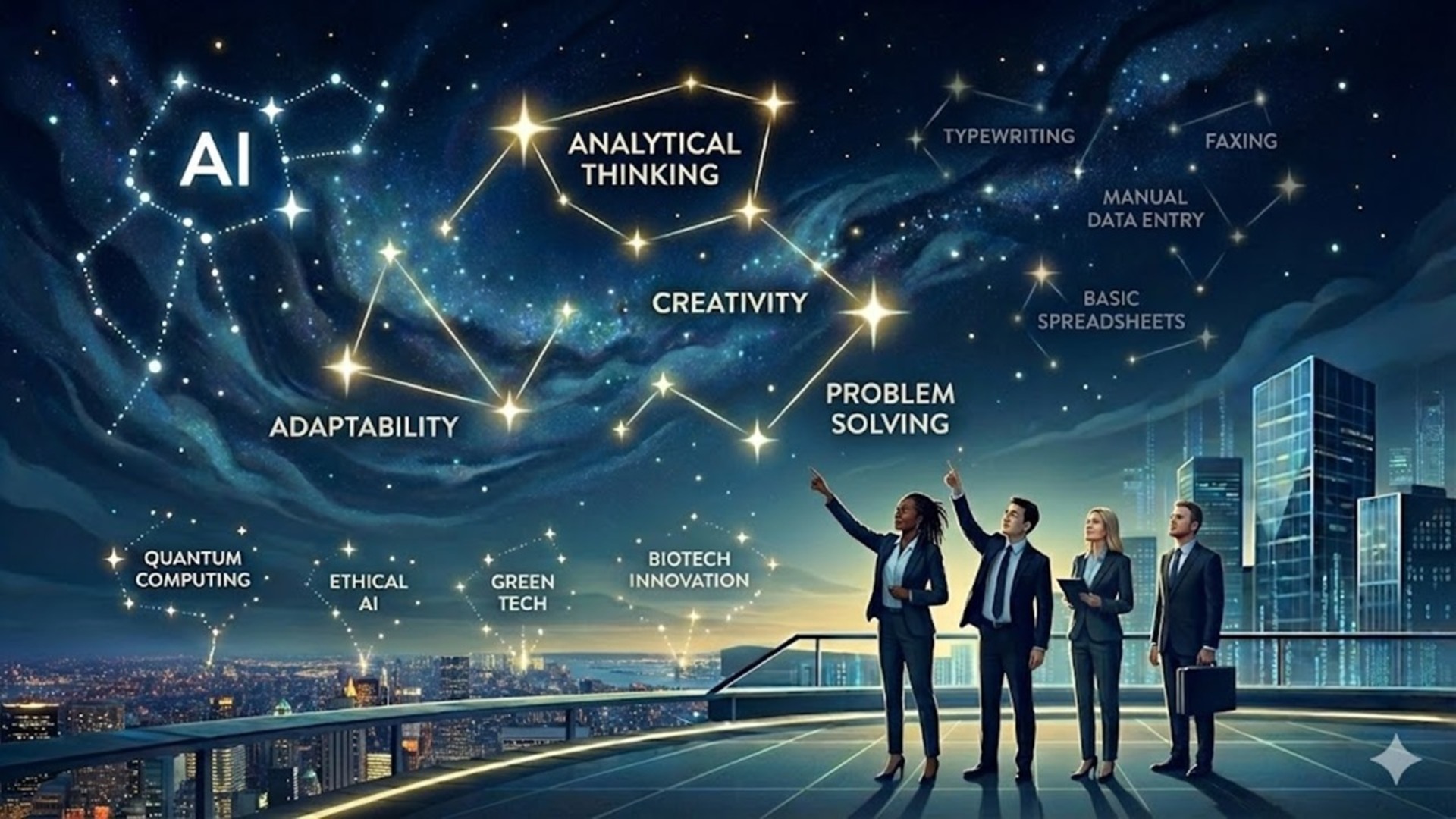
Sixty-three percent of employers identify skills gaps as their biggest barrier to business transformation, according to the World Economic Forum’s Future of Jobs Report 2025. Simultaneously, qualified candidates send hundreds of applications with no response. Tech graduates with relevant training face wave after wave of rejection. Hospital systems report acute staffing shortages while nurses struggle to secure stable roles.
These realities are not contradictory — they’re the structural truth of hiring as we enter 2026.
Why Everyone’s Frustrated (and Both Sides Are Right)
The hiring market didn’t “break” in one dramatic moment; it fractured along fault lines that rarely surface in quarterly reports but define daily experience. What looks like a paradox — employers unable to hire while candidates can’t get hired — is actually the result of a matching system that no longer matches. It was built for a labor market that no longer exists.
THE MISMATCH BY THE NUMBERS
- 39% of workers’ skills will transform or become obsolete by 2030 (World Economic Forum)
- Degree requirements fell from 40% to 32.6% of job postings (Indeed)
- Mid-tier roles are disappearing as entry-level work automates and senior hiring freezes
- Remote work increased optionality but introduced new friction points
Geographic mismatch persists even in a remote-first world. Talent clusters in high-cost metros while many employers operate elsewhere. Remote work promised an elegant solution, but practical challenges — time zones, collaboration rhythms, and organizational readiness for distributed work — have kept the gap alive.
Skills mismatches intensify the problem. Workers trained for yesterday’s needs apply for tomorrow’s roles. Employers list precise criteria — “five years with this exact tech stack” — even when the tech stack is younger than the requirement.
The middle of the market has hollowed out. Entry-level roles automate faster than universities update curriculum. Senior roles freeze during uncertainty. Experienced professionals who aren’t quite executives encounter fewer openings and greater competition.
This isn’t cyclical. It’s structural.
The Adaptation Playbook: What’s Actually Working
While some organizations remain paralyzed by the paradox, others are rewriting their approach entirely. Their patterns share common threads: flexibility, internal focus, and abandoning rigid matching criteria.
WHAT SMART COMPANIES ARE DOING
- 85% prioritize upskilling their workforce (World Economic Forum)
- 64% cite employee wellbeing as a top talent-attraction strategy (World Economic Forum)
- Internal mobility first — external recruiting second
- Skills-based hiring — capability over pedigree
- Flexible staffing models — fractional, contract, and project-based talent
The most successful organizations don’t treat training as an HR obligation; they treat it as core business strategy. Rather than waiting for the market to produce perfectly fitted candidates, they invest in building capability internally.
Internal mobility is experiencing a resurgence. Instead of immediately opening roles externally, companies map internal talent and create pathways for lateral or adjacent moves. A marketing analyst shifts into data analytics. A project manager transitions into product management. These aren’t flawless fits — they’re strategic bets on adaptability.
Flexible staffing models provide vital bridges. Fractional roles and project-based talent let organizations access expertise without long-term commitments, while giving workers a path to bypass rigid screening filters by demonstrating capability through contribution.
And in a tight labor environment, the organizations that consistently attract and retain talent compete on more than compensation. Culture, psychological safety, growth opportunities, and genuine flexibility have become decisive differentiators — factors that rarely show up in salary surveys but profoundly shape lived experience.
Beyond the Paradox
The 2026 labor market won’t make sense through the lens of old logic. It becomes coherent only when we accept that the traditional matching game — rigid requirements meeting rigid credentials — no longer functions at scale.
THE NEW REALITY
For employers: Unlock talent already in your orbit For candidates: Position yourself as adaptable, not perfectly credentialed For both: Flexibility outperforms rigidity
The perfect external candidate may not exist. The capable internal person you can develop often represents the fastest and most reliable path forward.
For candidates, showcasing learning velocity — how quickly you can absorb, adapt, and deliver — signals far more value than listing mastery of tools that may be outdated before the hiring cycle ends.
The paradox persists because structural mismatches don’t disappear overnight. But thriving in 2026 doesn’t require solving the paradox — only navigating it with intention and adaptability.
The market didn’t break on its own. But the organizations that succeed now are the ones quietly building something better in its place.