
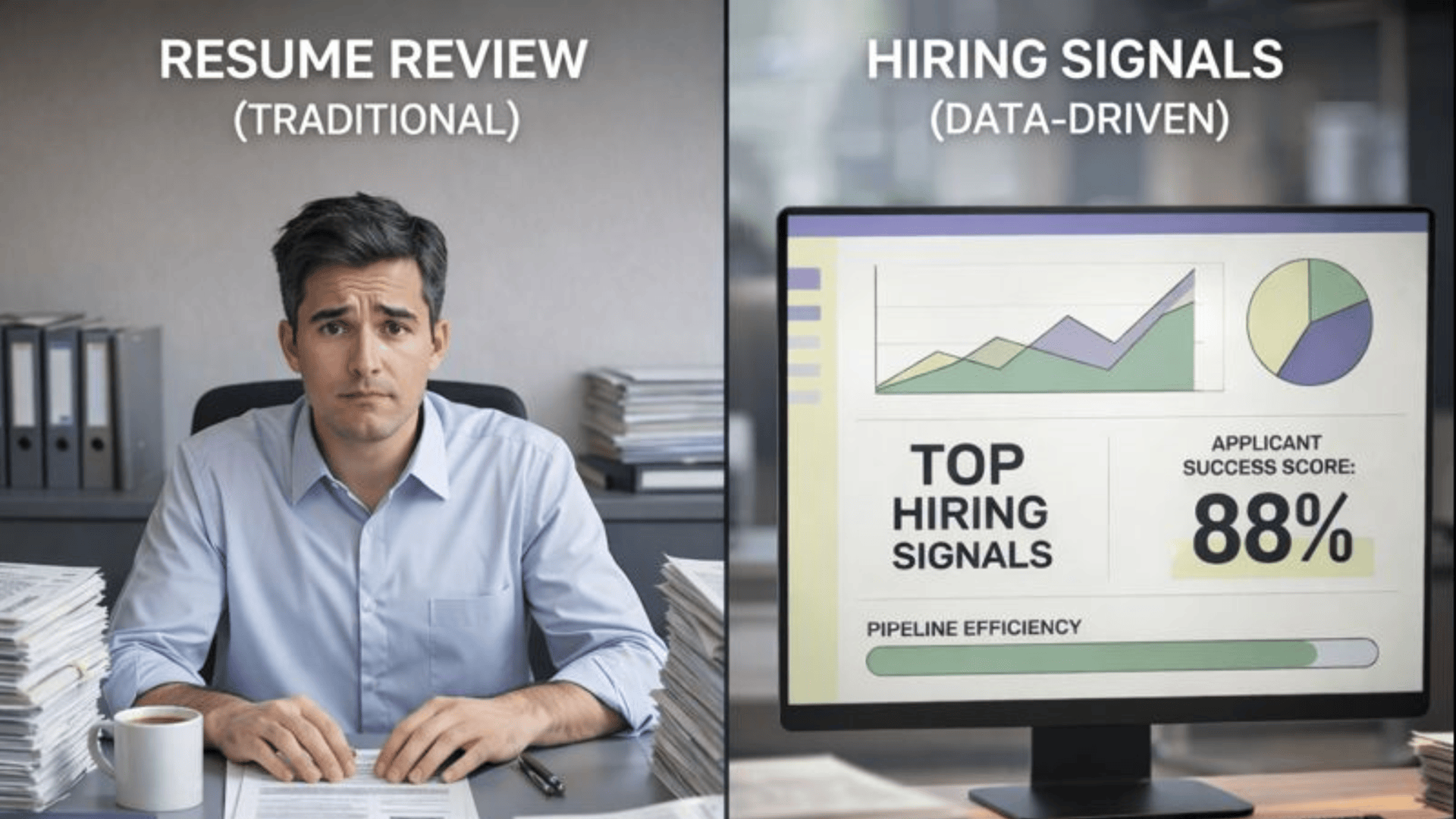
Staffing firms lose time and money every day because too many hiring decisions still rely on instinct instead of data.
Missed placements, slow feedback cycles, inconsistent interviews, and candidate drop-off all add up. Recruiters work hard, but without clear signals, even strong teams end up reworking searches or losing candidates late in the process.
The good news is that talent intelligence tools are starting to address these issues in practical ways. That’s why large enterprises — and increasingly staffing firms — are investing in them.
Talent intelligence is the use of data to make better hiring decisions.
Instead of relying only on resumes, recruiter judgment, or hiring manager preferences, these tools combine internal and external data to show what actually works over time.
At a basic level, talent intelligence helps answer questions like:
The goal isn’t to replace recruiters or automate relationships. It’s to help recruiters move faster, reduce guesswork, and improve placement quality.
One of the most overlooked aspects of hiring is the interview process.
Most interviews:
As a result, strong candidates often disengage — not because of compensation or role fit, but because the interview process feels unstructured, slow, or unprofessional.
Interview intelligence tools help by introducing consistency and feedback into the process. They can:
Companies using these tools report:
For staffing firms, these outcomes directly affect fill rates and client satisfaction.
For staffing companies, talent intelligence isn’t about adding complexity. It’s about improving the parts of the hiring process that directly affect results.
In practice, this means:
Instead of guessing why a placement failed, firms can start seeing patterns:
That kind of visibility creates real operational leverage.
Investors are funding talent intelligence platforms because recruiting is expensive and bad hires are even more costly. Data-driven hiring reduces wasted effort and improves outcomes at scale.
But staffing firms don’t need to think about valuations or hype.
The practical question is much simpler:
Does this help us fill roles faster, reduce candidate fall-off, and improve placement quality?
If the answer is yes, it’s worth paying attention.
Talent intelligence isn’t about replacing recruiters or turning hiring into a black box.
It’s about:
Staffing firms that adopt these tools thoughtfully will move faster, deliver better results, and strengthen client relationships.
Firms that don’t will still work hard — but with less visibility into what actually works and why.
kk
To learn more about Sharp Decisions, get in touch with us here. For more insights, follow us on LinkedIn and Twitter, and find job opportunities on our careers page.

Examine how skills-based hiring risks becoming digital piecework and exploitation, plus concrete guardrails to ensure dignity alongside opportunity in tomorrow's workplace.
.jpg)
AI-powered talent intelligence reveals hidden workforce skills, helping companies save millions in recruitment while improving employee retention rates.


We use cookies to ensure that we give you the best experience on our website. If you continue to use this site we will assume that you are happy with it.
